Anime TCG & Card Game Templates — Best Designs for Gacha & JRPG
Looking for the best anime TCG template or anime card template? Discover what makes a great anime card game design, the top styles for gacha and JRPG projects, and ready-made PSD templates.
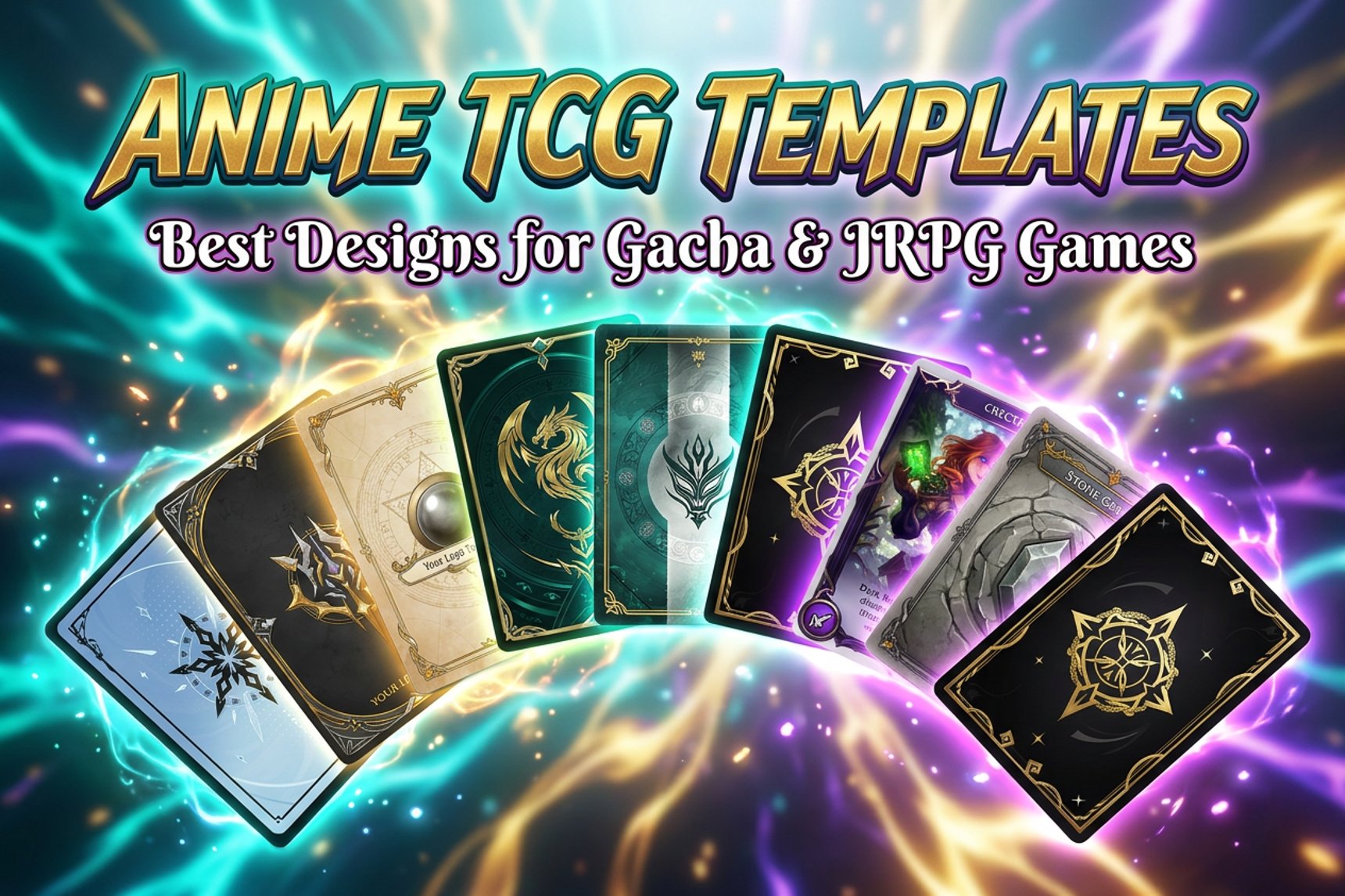
The anime TCG and anime card game market is one of the fastest-growing segments in indie game development. From mobile gacha battlers to JRPG deckbuilders and physical card games inspired by anime series, the demand for clean, expressive anime card templates has never been higher.
But what exactly makes an anime card template work for a card game? And what separates a mediocre design from one that actually fits the aesthetic players expect from the genre?
This guide covers both — and points you to the templates that get it right.
What Makes a Good Anime TCG Template?
Anime card games have a very specific visual language that separates them from Western fantasy TCGs like Magic: The Gathering or dark dungeon crawlers. If your anime card template looks like it belongs in a medieval European RPG, it will not resonate with an anime audience regardless of how good the artwork is.
Here is what the best anime TCG and card game templates have in common:
Clean, minimal frames. Western TCGs lean into heavy ornate borders that compete with the art. Anime card templates — from the Pokémon card game to Shadowverse to Uma Musume — use thinner, more elegant frames that let the character artwork breathe. The card is a window into the art, not a frame fighting against it.
Elemental color coding. Almost every successful anime gacha and JRPG uses an elemental system — Fire, Water, Wind, Earth, Light, Dark — with distinct color palettes per element. Your anime card game template needs to support this from day one with color variant assets already built in.
Rarity communication. Star ratings (1★ to 5★) are the universal language of gacha. If you are building a gacha card game, your rarity system needs to be immediately readable and visually exciting at the highest tier. Glowing borders, special finishes, and premium gem systems signal "this card is special" at a glance.
Portrait-focused art window. Anime card templates prioritize character visibility. The art frame should showcase the character from waist or shoulders up, with minimal UI elements overlapping the portrait. Stats go below or in corners — never on top of the character's face.
The Main Styles of Anime Card Game Templates

Gacha / Mobile RPG Style
The dominant aesthetic in mobile anime games. Think Genshin Impact, Honkai Star Rail, Blue Archive. Features clean borderless or thin-frame designs, elemental color themes, and a strong focus on full-art character portraits. This anime card template style uses minimal UI — just enough to communicate stats without distracting from the art.
JRPG / Ink-Wash Style
Inspired by traditional Japanese art and classic JRPGs. Ink-wash textures, golden lotus frames, calligraphy aesthetics, and dragon seal card backs. This anime card game template style works beautifully for games with an Asian mythology setting — Wuxia, Xianxia, or samurai themes.
Celestial / Geometric Style
Clean geometric patterns, star motifs, and metallic color themes. Common in modern anime games that blend fantasy and science fiction. Appeals to the Visual Novel and magical girl crowd. Color variants (gold, silver, blue, purple) make this anime card template style extremely versatile for multi-element systems.
Dark Anime / Soulslike Style
For anime games with a darker tone — demon hunters, cursed warriors, death game protagonists. Heavier frames, darker backgrounds, dramatic gem accents. Think Danganronpa, No Game No Life, or Fate/Stay Night aesthetics.
What to Look for in an Anime Card Template
Before downloading any anime card template or TCG template, check these four things:
Color variants included. Building 5 element themes from scratch doubles your production time. A good anime card game template ships with at least 3–5 pre-built color variants (Fire/red, Water/blue, Wind/teal, Earth/gold, Dark/purple) already set up in the PSD.
Modular PNG assets. If you are building a digital game in Unity or Godot, you need every card component as a separate transparent PNG — frame, background, stat plate, element icon. A flat PSD is useless in a game engine.
Rarity system built in. Star rating assets, rare gem indicators, or rarity border variants should be part of the anime TCG template, not an afterthought you build yourself.
Commercial license. If you are releasing a game — on any platform, including free-to-play mobile — you need a commercial license. Fan tools and free anime card template sites almost never include one.
The Best Anime TCG and Card Game Templates for Indie Developers
Here are the anime card templates built specifically for anime card game aesthetics — each includes PSD source files, modular PNG assets, a rarity system, and a commercial license:
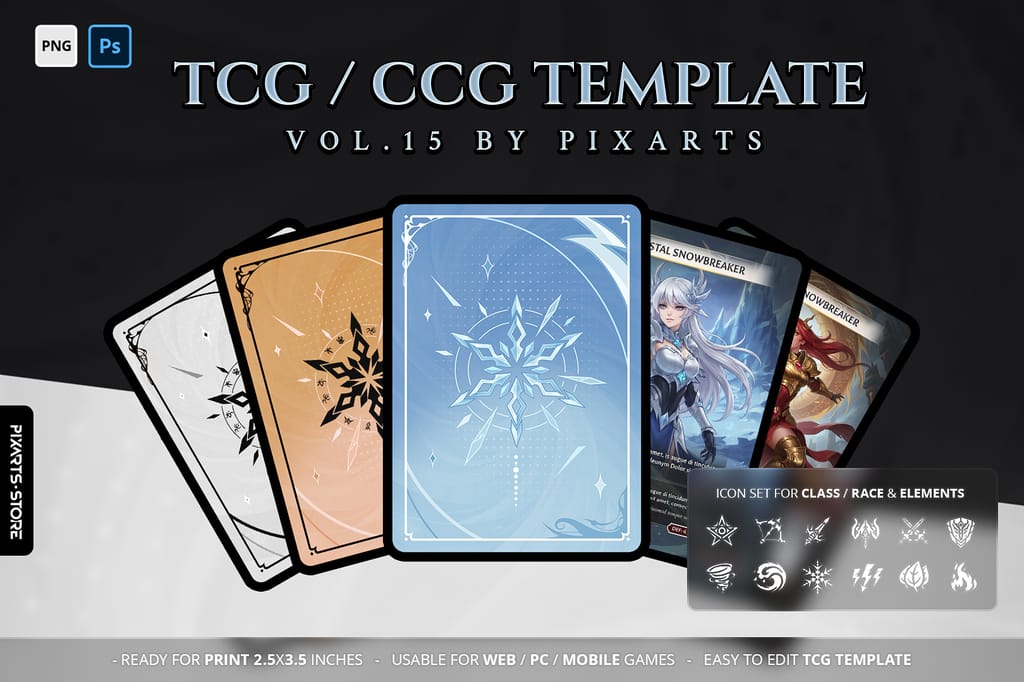
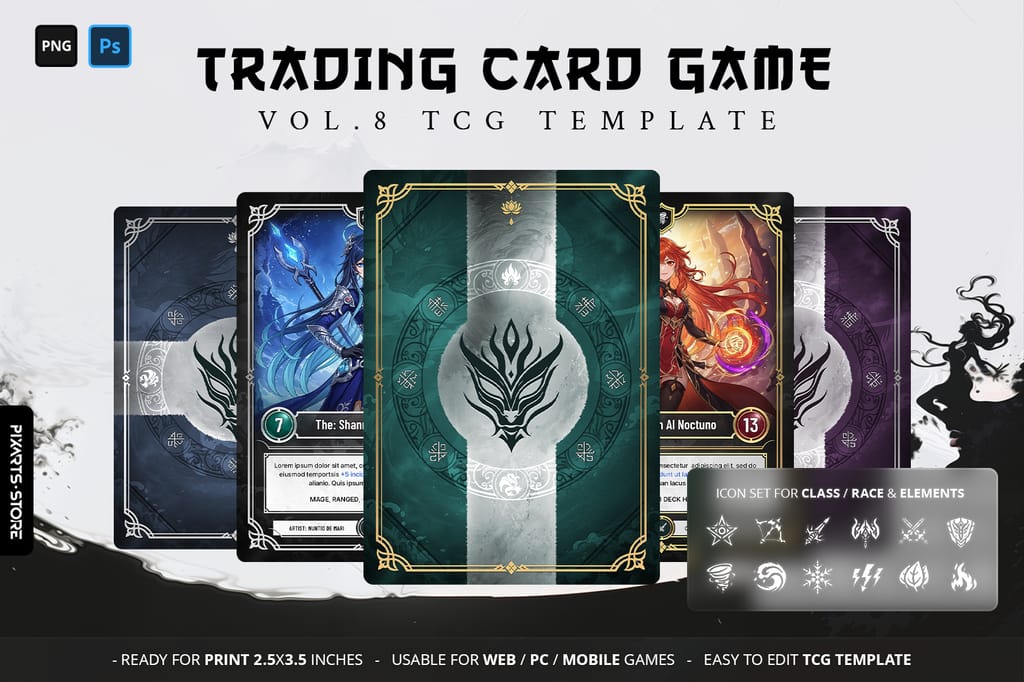
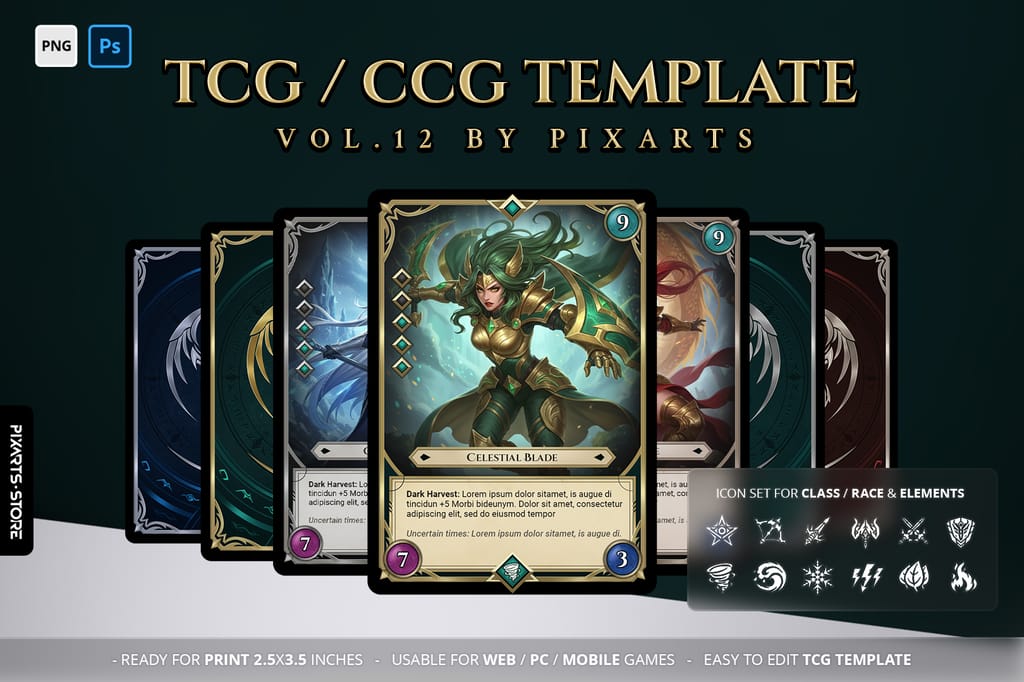
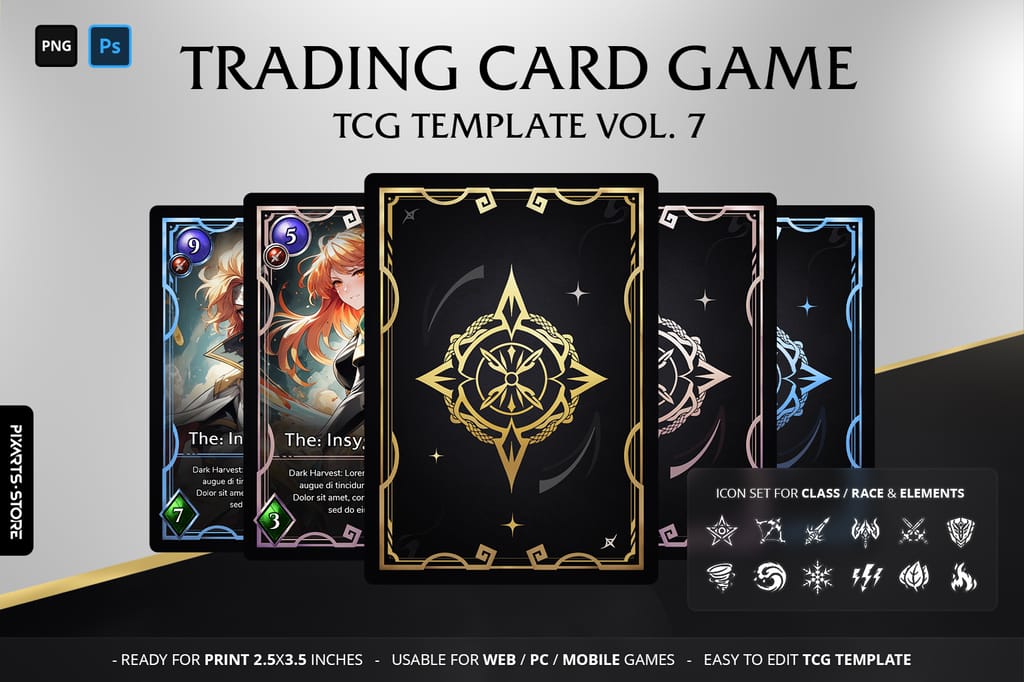
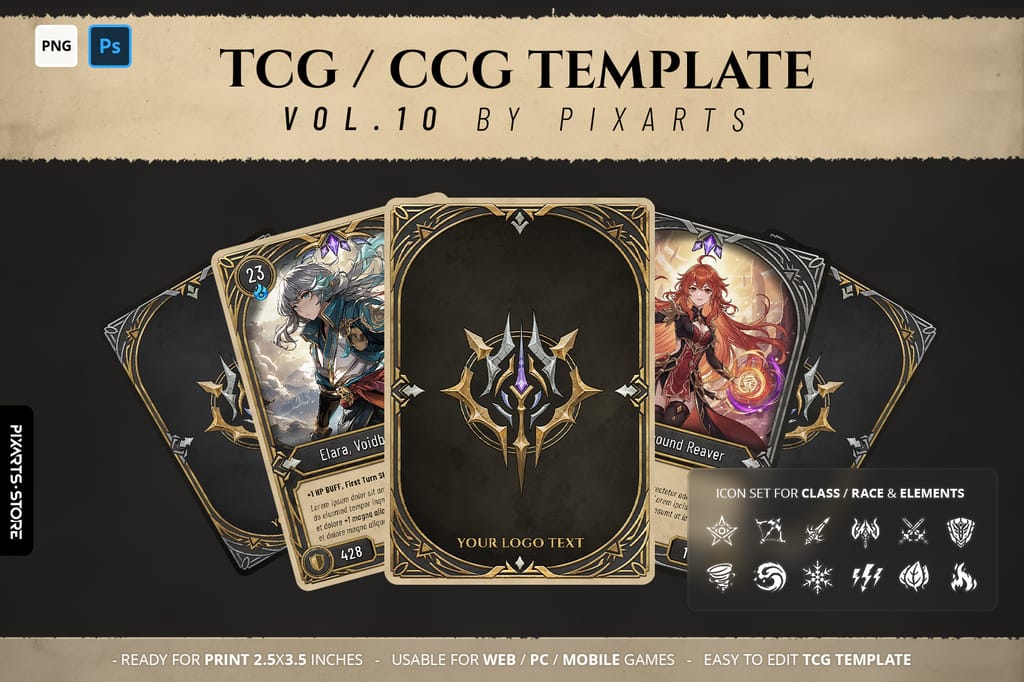
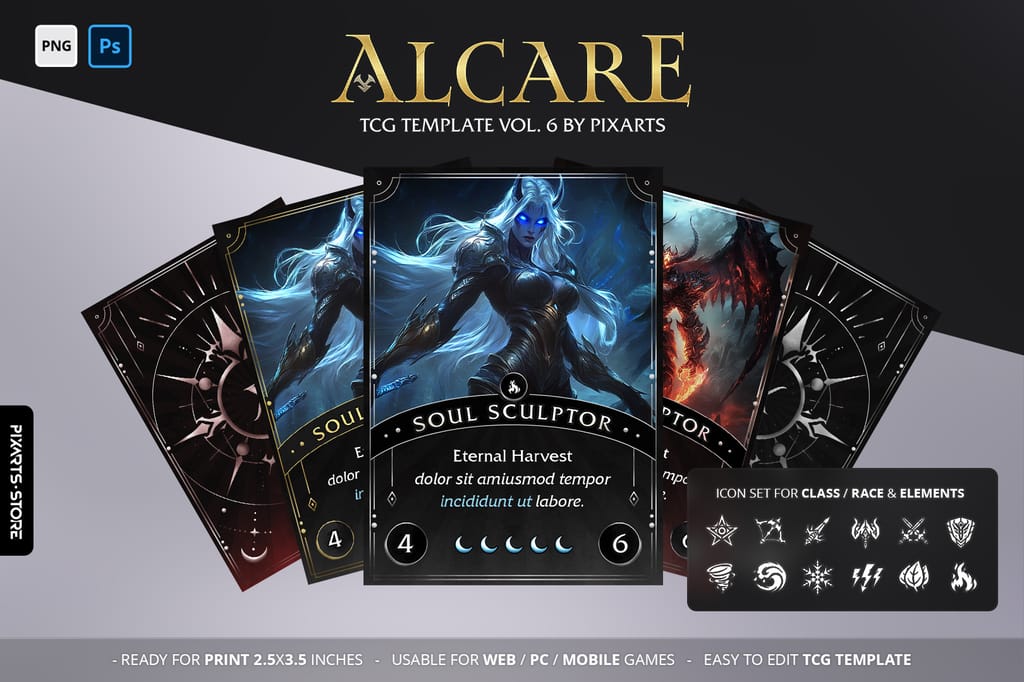

- Element system ready on day one: 3–5 color variants are pre-built in the PSD... No manual recoloring per element — just switch the variant layer and export.
- Engine-ready modular assets: Every component exports as a transparent PNG for direct Unity or Godot integration. No Photoshop dependency in your production pipeline.
- Rarity system included: Star ratings, gem indicators, and rarity border variants are built into the anime card game template — the most time-consuming part of gacha card design is already done.
Browse the Full Anime Card Template Collection
Looking for a different aesthetic? From dark fantasy dungeon crawlers to sci-fi strategy games and oriental wuxia — every anime TCG template ships with full PSD source files, modular PNG assets, and a commercial license.

Dedicated to empowering game developers with premium digital assets. We specialize in crafting immersive UI designs, distinct logos, and web solutions that take your game project to the next level.