Dark Fantasy CCG Templates for Soulslike & Dungeon Crawler Games
Looking for a dark fantasy card game template? Discover what makes great soulslike and dungeon crawler card design, and find ready-made PSD templates for your project.
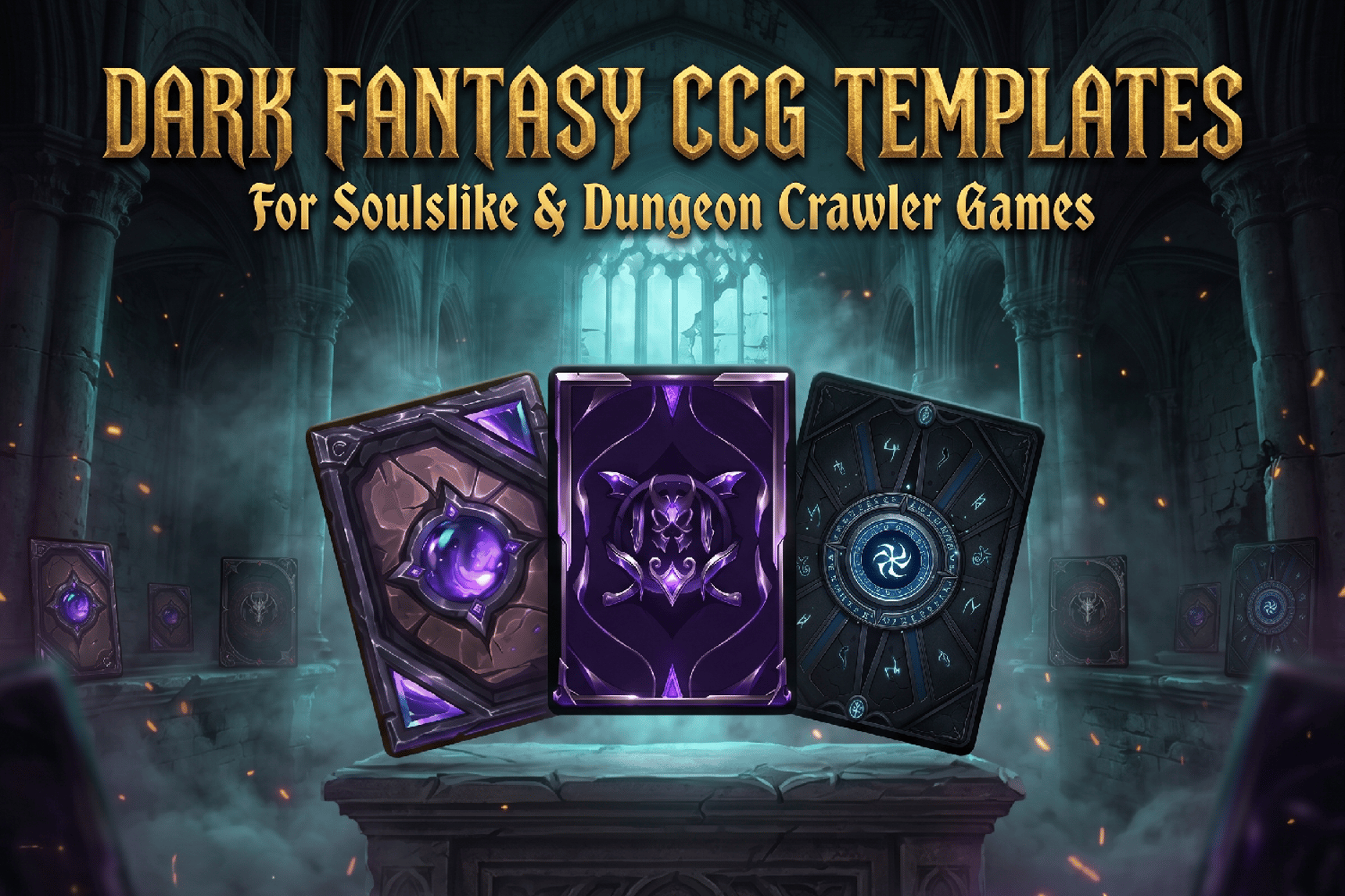
Dark fantasy is one of the most demanding aesthetics to get right in card game design. Get it wrong and your cards look like generic Halloween clip art. Get it right and every card feels like a heavy artifact pulled from a cursed dungeon — something players want to hold, collect, and fear.
This guide breaks down exactly what separates great dark fantasy card design from mediocre attempts, and which templates are built specifically for soulslike games, dungeon crawlers, and eldritch horror card battlers.
What Makes Dark Fantasy Different from Regular Fantasy
Regular fantasy card games — think golden borders, glowing mana crystals, colorful heroes — are designed to be inviting. Dark fantasy card games are designed to be oppressive. The difference shows in every design decision.
Weight over elegance. Where golden fantasy uses thin, decorative filigree, dark fantasy uses heavy iron, cracked stone, and corroded metal. The card should feel like it has mass — like picking it up would require effort.
Decay over polish. Pristine surfaces belong to light fantasy. Dark fantasy cards show wear — rusted edges, weathered stone, faded symbols, cracked gems. Imperfection signals age, danger, and power earned through suffering rather than granted by divine grace.
Restraint over brightness. Dark fantasy palettes are built around deep purples, cold blues, tarnished golds, and charcoal blacks. Bright accent colors — a glowing purple gem, a cold blue rune — work precisely because they are surrounded by darkness. Overuse kills the effect immediately.
Dread over beauty. The card back design matters enormously in dark fantasy. In a light fantasy game, the card back is decorative. In a soulslike or dungeon crawler, the card back is a threat — players should feel mild unease every time they see a face-down card.
The Visual Language of Soulslike Card Games
Games like Slay the Spire, Inscryption, Darkest Dungeon, and Monster Train have defined what players expect from dark fantasy card aesthetics. Studying them reveals consistent patterns:
Stone and iron over wood and cloth. Card frames that mimic dungeon architecture — cell doors, altar stones, iron grating — immediately communicate the setting without a single word of flavor text.
Runic and occult geometry. Magic circles, alchemical symbols, and rune circles on card backs signal forbidden knowledge. They reward close inspection and reward players who engage with the lore.
Cold lighting. Moonlight, bioluminescence, cursed glows — dark fantasy avoids warm yellows and oranges except as danger signals. Cold teal, pale blue, and sickly purple are the dominant accent colors.
Skull and bone motifs used sparingly. The temptation for first-time dark fantasy designers is to put skulls on everything. The best soulslike art uses skull motifs as punctuation — one skull on the card back, not as the entire visual vocabulary.
The Four Dark Fantasy CCG Template Styles

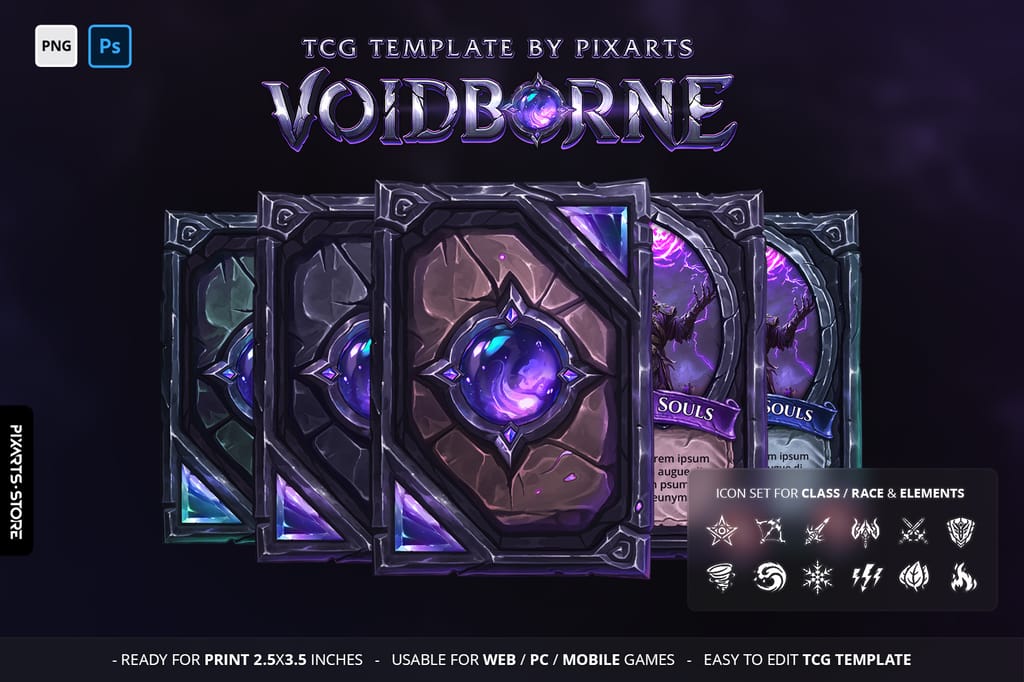
The Stone Obsidian Style
Heavy, hand-painted stone borders with glowing void gems. The physical weight of the card frame is the entire aesthetic. Ideal for dungeon crawlers, necromancer decks, and games where cards represent ancient artifacts rather than characters.
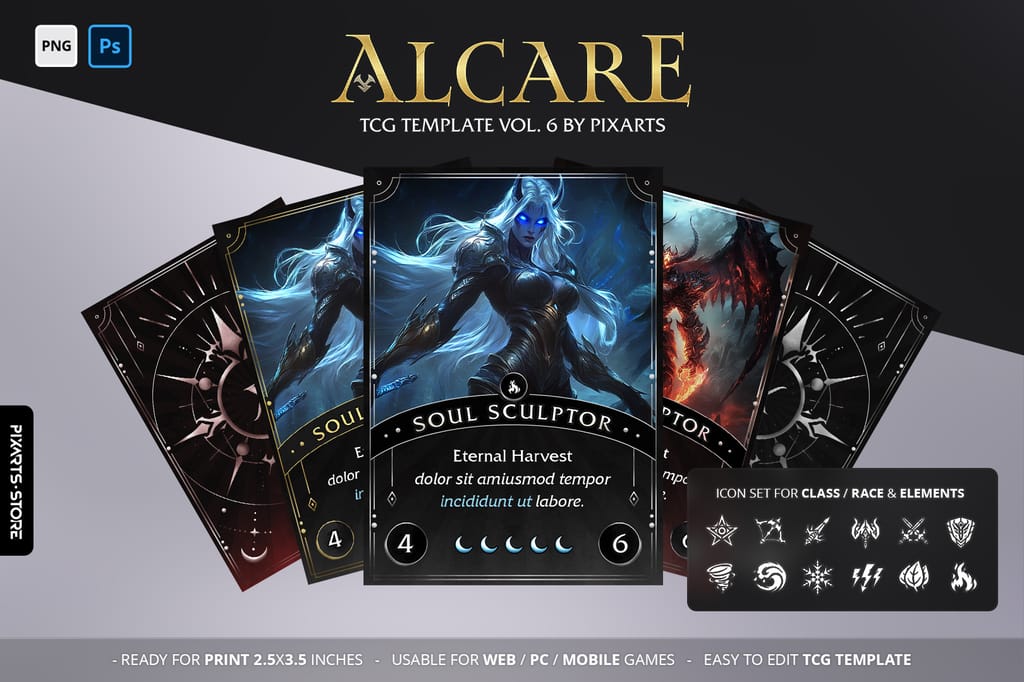
The Eldritch Tarot Style
Gold filigree meets lunar mysticism. Moon phases, celestial patterns, and a tarot-inspired card back. This style works for soulslike games with a religious or cosmic horror underpinning — think cursed clergy, eldritch gods, forbidden rituals.
The Gothic Iron Style
Cathedral architecture, iron spikes, gargoyle details, and a dragon skull card back inside a runic circle. The heaviest and most aggressive of the four styles — built specifically for demon, undead, and boss-tier card designs.

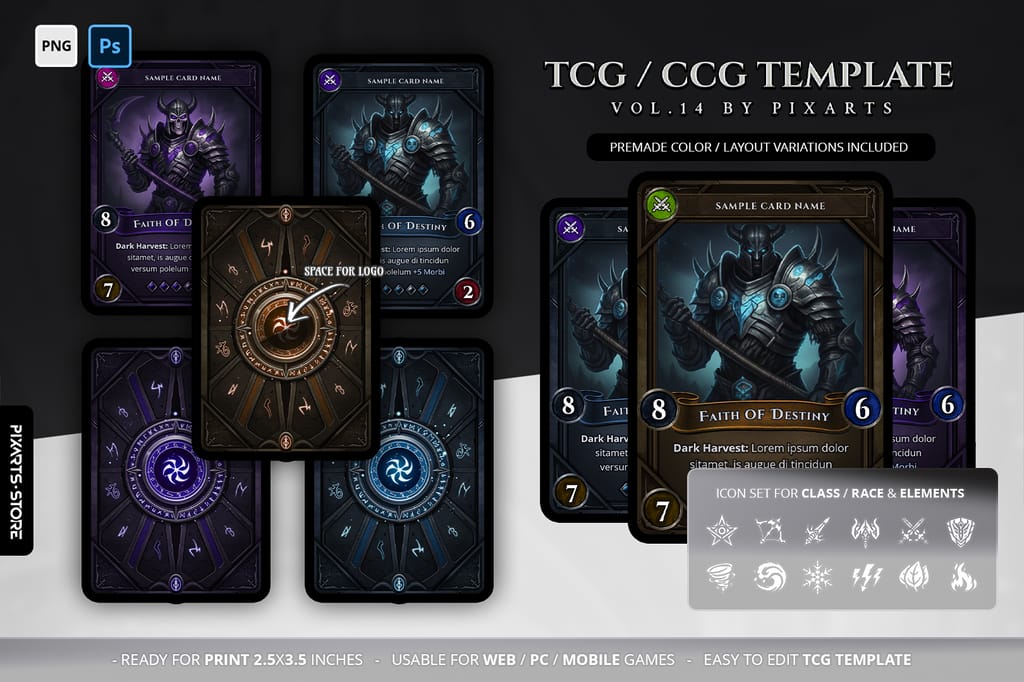
The Dark Steel Runic Style
Forged dungeon gates, cold blue soul energy, and glowing ancient runes. The most versatile dark fantasy style — works equally well for Viking themes, Nordic mythology, necromancer mechanics, and general dungeon crawler aesthetics.
Common Dark Fantasy Card Design Mistakes
Making everything too dark to read. Darkness is the atmosphere, not the design system. Your card name, stats, and rules text need to be readable under normal lighting conditions. A card that looks dramatic in a promo screenshot but is illegible at the table is a design failure.
Ignoring the rarity system. Dark fantasy games often have the most dramatic rarity tiers in the genre — Common cards should feel ominous, Legendary cards should feel genuinely terrifying. Your rarity gem and border system should scale the dread alongside the power.
Copying existing IP aesthetics too closely. FromSoftware, Blizzard, and CD Projekt have all built iconic dark fantasy visual languages. Players recognize these immediately — and immediately think "fan project" rather than "original game" when they see a direct copy.
Start with your card back design. In dark fantasy games, the card back is seen more often than any individual card face — every face-down card, every shuffle, every mulligan. If the card back does not feel threatening, the whole aesthetic falls apart. Build the back first, then design the face to match its weight.
Browse All Dark Fantasy TCG Templates
Every template ships with full PSD source files, modular PNG assets for Unity and Godot, matching card back designs, and a commercial license.

Dedicated to empowering game developers with premium digital assets. We specialize in crafting immersive UI designs, distinct logos, and web solutions that take your game project to the next level.